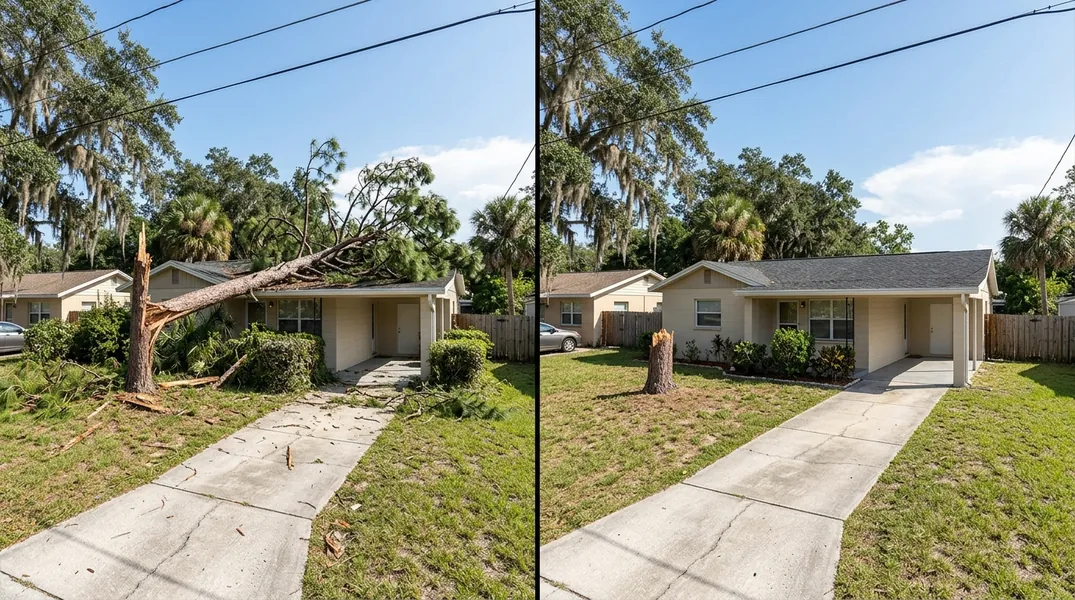
Why Hurricane Season Tree Prep Matters in Tampa
Hurricane season in Florida runs from June through November, and Tampa sits squarely in the path of tropical storms and major hurricanes. Every year, homeowners across the region face the same reality: trees that aren't properly maintained become liabilities when high winds arrive. Weak branches, dense canopies, and structural imbalances create dangerous conditions that can lead to property damage, power outages, and even personal injury.
The key to protecting your home and landscape isn't to remove every tree on your property. Instead, it's about making strategic decisions now, before June arrives, to ensure your trees can withstand the forces nature will throw at them. Proper hurricane tree trimming in Tampa isn't just about aesthetics or general health. It's a critical part of your home's disaster preparedness plan. Trees that have been professionally evaluated and pruned for wind resistance will shed branches and flex safely rather than snap, uproot, or fail catastrophically during a storm.
Understanding Wind-Resistant Pruning and Storm Prep Tree Service
Tree Trimming & Pruning for hurricane preparedness is fundamentally different from routine maintenance pruning. Wind-resistant pruning follows a specific methodology designed to reduce wind load while maintaining the tree's structural integrity and health. The goal is to thin the canopy, remove dead or diseased wood, eliminate crossing branches, and establish a strong central leader that can flex and move safely in high winds.
Storm prep tree service begins with a thorough assessment of each tree on your property. A certified arborist will evaluate branch angles, identify weak crotches, assess overall tree health, and determine which trees pose the greatest risk during a hurricane. Trees with multiple trunks, poor branch architecture, or signs of disease are priority candidates for corrective pruning or, in some cases, Tree Removal. The pruning itself involves removing no more than 25 percent of the tree's crown, cutting branches back to the branch collar, and focusing on creating an open, balanced structure that allows wind to pass through rather than catching it like a sail.
Laurel Oak Failure: A Tampa-Specific Risk You Can't Ignore
If you have laurel oaks on your property in Tampa, you need to pay special attention this spring. Laurel oaks are native to Florida and beloved by many homeowners for their graceful form and evergreen foliage. However, they have a critical structural weakness that becomes a serious concern during hurricane season. Their wood is relatively soft and brittle, their branch angles tend to be narrow and weak, and they often develop heavy, dense canopies that catch wind like a parachute. When these factors combine with high winds, laurel oak failure becomes a real possibility.
Laurel oak failure typically occurs at branch unions or at the base of major limbs, where the wood simply cannot support the weight and wind force. Unlike some tree species that bend and recover, laurel oaks are prone to sudden, catastrophic failure with little warning. A tree that looks healthy and stable in May can lose major limbs or topple entirely in a June storm. The solution is not to panic or automatically remove the tree, but to have it professionally evaluated by a certified arborist. Strategic pruning can significantly reduce the risk by lowering wind load, removing weak branches, and improving overall structure. However, if a laurel oak is severely compromised or in a critical location near your home, Tree Removal may be the safest option.
The Pre-June Timeline: When to Schedule Hurricane Tree Trimming in Tampa
Timing is everything when it comes to storm prep tree service. The ideal window for hurricane tree trimming in Tampa is April through May, before the official season begins on June 1st. This timing gives you several advantages. First, it allows tree care companies to work without the pressure of emergency demand that builds as June approaches. Second, it gives your trees time to recover from pruning and develop new growth before facing storm stress. Third, it positions you ahead of the rush, ensuring you get an appointment with qualified professionals rather than waiting months or settling for subpar service.
If you haven't scheduled your tree evaluation yet, now is the time to act. Call Tampa Tree Service at (656) 226-9197 or request a free estimate today. A professional assessment typically takes 30 to 60 minutes and will identify which trees need attention, what type of pruning is recommended, and whether any trees should be removed for safety. Don't wait until late May when schedules are booked solid and storm season is just around the corner.
Other Trees to Prioritize Beyond Laurel Oaks
While laurel oaks deserve special attention, they're not the only species that pose hurricane risks in Tampa. Other trees commonly found in the area that require pre-season evaluation include sand live oaks, which can develop unbalanced crowns and weak branch angles; Brazilian pepper, which is often top-heavy and prone to wind damage; and various pine species, which can develop internal rot and become structurally unsound. Additionally, any tree with a history of storm damage, signs of disease or pest infestation, or poor structure should be professionally assessed before June.
The good news is that most trees can be made significantly safer through proper pruning and maintenance. Even trees that have survived previous hurricanes may have developed damage or structural issues that weren't apparent after the storm passed. A professional storm prep evaluation will reveal these hidden problems before they become dangerous. If you have multiple trees on your property, prioritize those closest to your home, those overhanging structures or power lines, and any species known to be weak in wind.
What to Expect from a Professional Hurricane Tree Assessment
When you schedule a storm prep tree service consultation with Tampa Tree Service, here's what you can expect. A certified arborist will walk your property and examine each significant tree. They'll assess branch structure, look for signs of disease or pest damage, evaluate the tree's overall health and vigor, and identify any obvious hazards. They'll explain their findings in plain language, showing you exactly what concerns them and why. They'll then recommend a specific course of action for each tree, whether that's corrective pruning, ongoing monitoring, or removal.
The arborist will also discuss the best timing for any recommended work and provide you with a clear pricing estimate. Quality tree care companies like Tampa Tree Service will give you transparent pricing upfront, with no hidden charges or surprise fees when the work is complete. You can feel confident moving forward knowing exactly what needs to be done and what it will cost. If you have questions about the recommendations or want a second opinion, don't hesitate to ask. Your safety and satisfaction are what matter most.
Looking for a professional tree service in Tampa? Tampa Tree Service responds fast for all your tree service needs.
Get a Free QuoteOur services: Tree Removal · Tree Trimming & Pruning · Stump Grinding